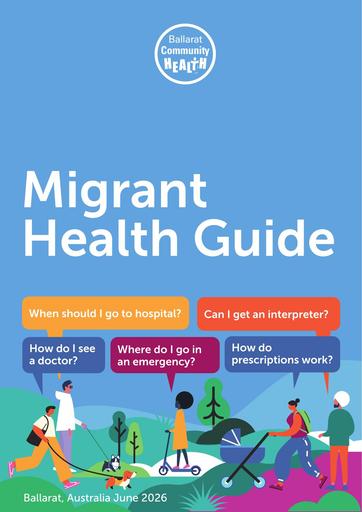
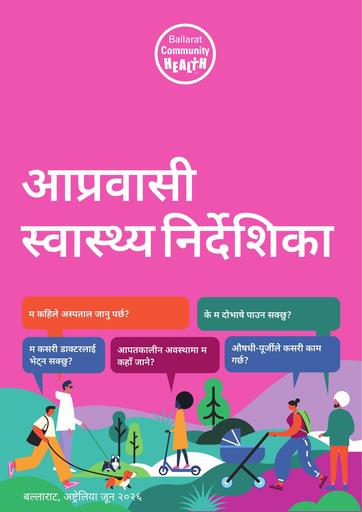
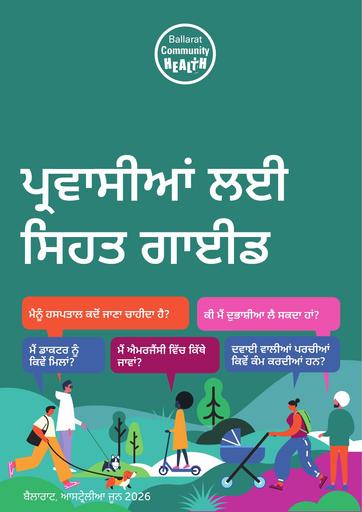
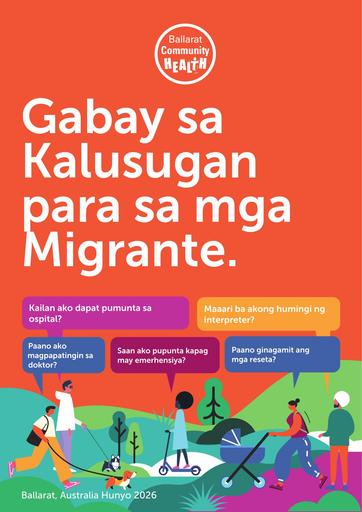
The Migrant Health Guide (English version) provides an introduction to how the Australian health system works and how to find and use health services in Ballarat. It aims to help you feel informed, confident and supported when seeking care for yourself and your family.
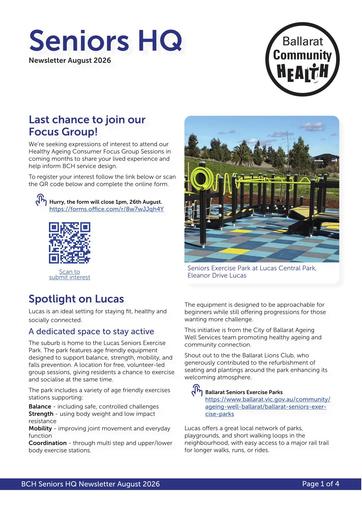
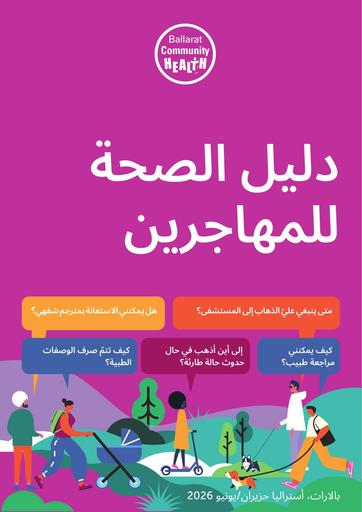
The Migrant Health Guide (Arabic version) provides an introduction to how the Australian health system works and how to find and use health services in Ballarat. It aims to help you feel informed, confident and supported when seeking care for yourself and your family.
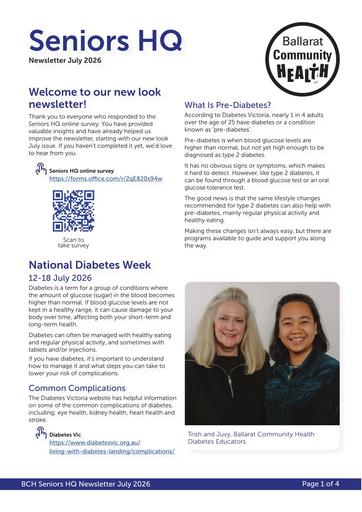
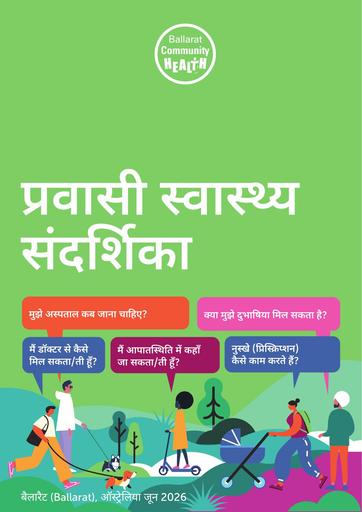
The Migrant Health Guide (Hindi version) provides an introduction to how the Australian health system works and how to find and use health services in Ballarat. It aims to help you feel informed, confident and supported when seeking care for yourself and your family.
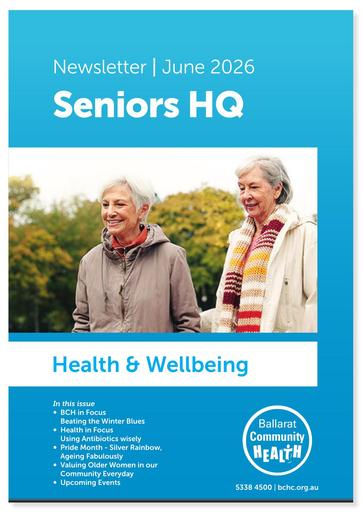
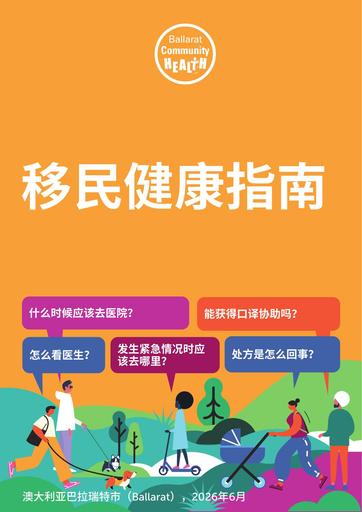
The Migrant Health Guide (Mandarin version) provides an introduction to how the Australian health system works and how to find and use health services in Ballarat. It aims to help you feel informed, confident and supported when seeking care for yourself and your family.
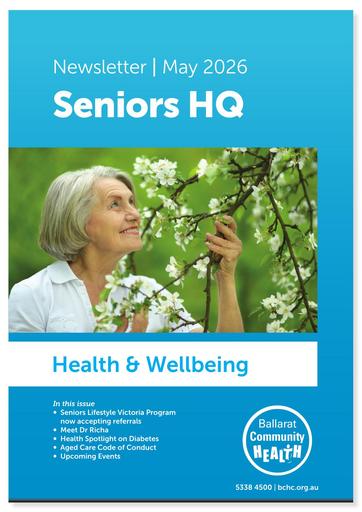
The Migrant Health Guide (Nepali version) provides an introduction to how the Australian health system works and how to find and use health services in Ballarat. It aims to help you feel informed, confident and supported when seeking care for yourself and your family.
The Migrant Health Guide (Punjabi version) provides an introduction to how the Australian health system works and how to find and use health services in Ballarat. It aims to help you feel informed, confident and supported when seeking care for yourself and your family.
The Migrant Health Guide (Tagalog version) provides an introduction to how the Australian health system works and how to find and use health services in Ballarat. It aims to help you feel informed, confident and supported when seeking care for yourself and your family.
The Comprehensive Relationships and Sexuality Education Toolkits for Primary and Secondary Schools have been developed to assist schools in navigating the complexity of teaching relationships, consent and sexuality (including puberty) education, that is correct, age- and stage-appropriate, and delivered in a safe and non-judgemental manner.
The Toolkits focus on specific information for schools, principals, teachers, parents and carers. Other key information includes a checklist to support and implement comprehensive Relationships and Sexuality Education in your school, as well as referral pathways into local support services.
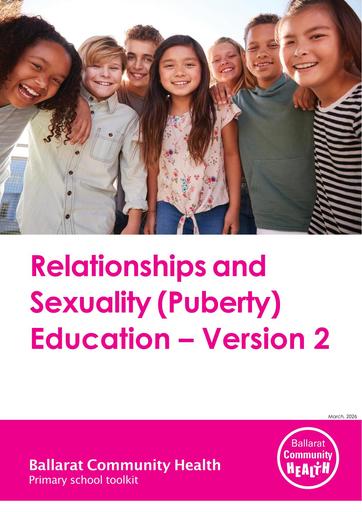
The ‘Comprehensive Relationships and Sexuality (Puberty) Education for Primary Schools Toolkit – Version 2’ has been developed to assist schools in navigating the complexity of teaching relationships and sexuality (including puberty) education, that is correct, age- and stage-appropriate, and delivered in a safe and non-judgemental manner.
This Toolkit focuses on specific information for schools, principals, teachers, families and carers. Other key information included is a checklist to support and implement comprehensive Relationships and Sexuality (including Puberty) Education in your school, as well as referral pathways into local support services.
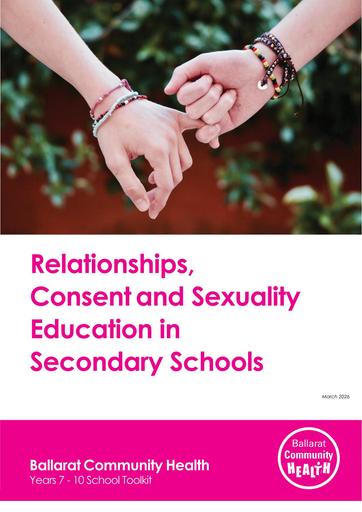
The ‘Comprehensive Relationships Consent and Sexuality Education for Secondary Schools Toolkit’ has been developed to assist schools in navigating the complexity of teaching relationships, consent and sexuality education delivered in a safe and non-judgemental manner.
This Toolkit focuses on specific information for schools, principals, teachers, families and carers. Other key information included is a checklist to support and implement comprehensive Relationships, Consent and Sexuality Education in your school, as well as referral pathways into local support services.
Funded from Department of Health Community Health. Health Promotion funding to implement the Achievement Program and Health Promoting Schools framework.
Health Promotion Officers know how to use this framework and can lead the process work. They often can’t do the delivery of the content, but can lead the process between schools and community organisations.
If HPOs are reluctant to provide guidance and support as sexual health and relationships is not one of their selected priority areas, often this work can also be reporting under ‘Mental Health and Wellbeing’ and/or ‘Safety and Prevention of Gender-based Violence’ health areas also.
Community Health Nurses
Referral pathway into community health provides health care and services to people of all genders and ages.
Services include GPs and nurse-led clinics, sexual health, mental health, alcohol, other drug and vaping services, youth services, allied health, health promotion and community programs. Often can deliver some sexual health, relationships, puberty content. Due to limited capacity CANNOT and MUST NOT be expected to deliver all RSE content to schools.
Community nurses can value add beyond what teachers can deliver themselves – for example, if you’re a sexual health service, that might be a session on your clinic, STIs and BBVs, PEP and PrEP, contraception, or terminations—topics where specialist knowledge really matters.
headspace
Referral pathway for young people (aged 12-25 years) with mental health, physical health, sexual health, drug & alcohol, educational & vocational support.
Community engagement workers can deliver mental health and suicide prevention workshop in schools which can link to healthy relationships, particularly healthy masculinity, friendship/romantic relationship breakdown, self-esteem, help-seeking discussions.
Women’s Health Organisations
Have education specific and evidence based resources designed to assist school leadership and staff to build capacity in the teaching of the gender equality, prevention of gendered violence and sexual health areas of the curriculum.
YouthLaw
Referral pathway for young people under 25. YouthLaw provides legal information and assistance to young people and adults working with or assisting young people (siblings/youth workers/social workers).
YouthLaw are also one of the lead agencies in providing information, advice and education in Affirmative Consent Laws and can provide presentations and advice to schools.
Sexual Assault Service Counsellors
Referral pathway that is free, confidential specialist counselling, advocacy and support to people who have experienced sexual assault including non-offending partners. CASA is a local Sexual Assault Service in Ballarat.
State Assets
Sexual Health Victoria
Provides free classroom activities, posters and resources for Relationships and Sexuality Education curriculum, aligned with the Victorian curriculum.
SHV can also provide fee-for-service professional development workshops for school staff, information sessions for families and carers, and in-classroom workshops with students.
Victoria’s Local Public Health Units (LPHUs) work with the Department of Health (the department). Most LPHUs across Victoria have Sexual and Reproductive Health and/or Prevention of Gender-based Violence as part of their local catchment plan.
Get in touch with your local LPHU to find out how they can provide support.
Referral pathway for young people under 25. YouthLaw provides legal information and assistance to young people and adults working with or assisting young people (siblings/youth workers/social workers).
YouthLaw are also one of the lead agencies in providing information, advice and education in Affirmative Consent Laws and can provide presentations and advice to schools.
Victoria Police – Sexual Offences and Child Abuse Investigation Team (SOCIT)
Experienced and qualified detectives who are trained to respond to and investigate sexual offences and child abuse by perpetrators known to the victim.
SOCIT detectives can also deliver workshops to students and/or school staff about consent, sexual assault, reporting, and help-seeking. police.vic.gov.au
Queer-specific Services
Referral pathway for young people for information and support, provide advice and support to schools through staff professional development, support schools to develop inclusive policies, procedures, inclusive school uniform, accessible toilets, advice for school camps/excursions, and gender affirmation plans, as well as resources for schools to display and information for families and carers.
Provides free webinars for school staff, families and carers covering topics, including Cyberbullying; Online porn; Sending nudes and sexting; Screen time; Gaming; Child grooming and unwanted contact; information and factsheets for the most up to date websites, games and app that children and young people are using; and how to report online harm and abuse to authorities.
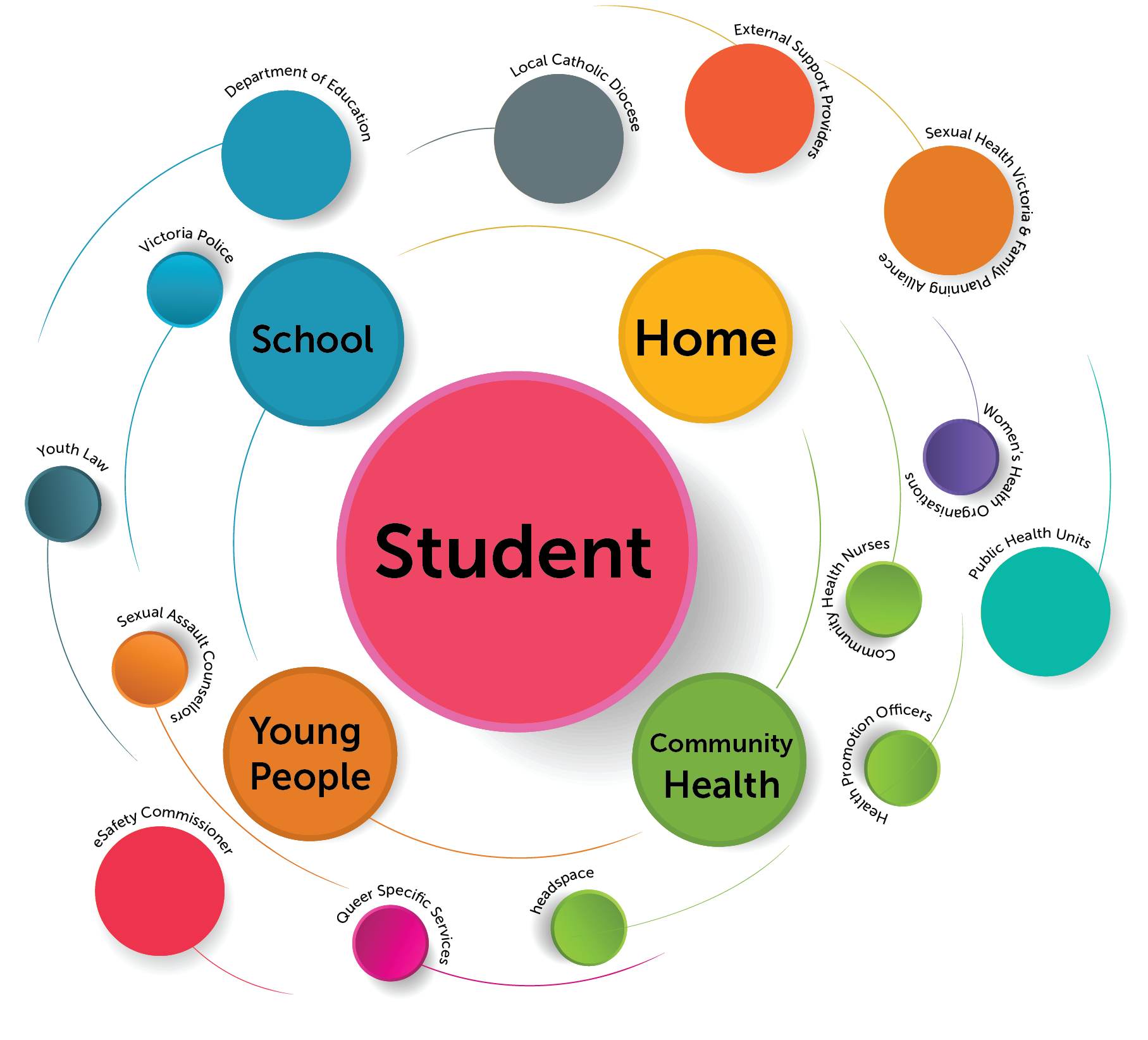
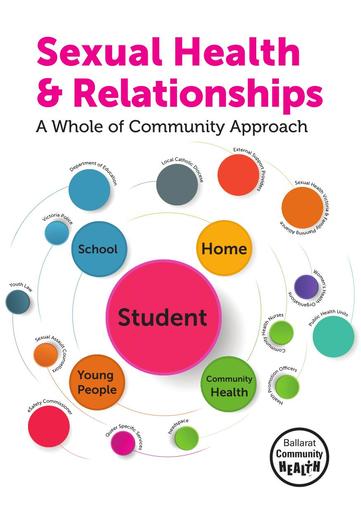
Ballarat Community Health's A Whole of Community Approach to Sexual Health and Relationships supports the need for comprehensive Relationships and Sexuality Education.
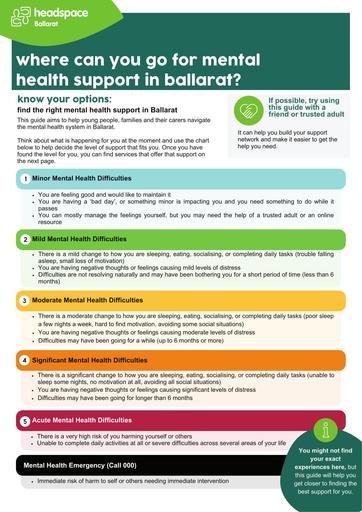
This guide aims to help young people, families and their carers navigate the mental health system in Ballarat. Think about what is happening for you at the moment and use the chart below to help decide the level of support that fits you.
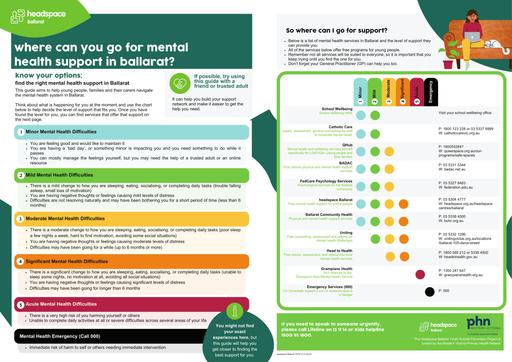
know your options: find the right mental health support in Ballarat This guide aims to help young people, families and their carers navigate the mental health system in Ballarat. Think about what is happening for you at the moment and use the chart below to help decide the level of support that fits you.
The Ballarat Youth Mental Health Service and Referral Guide should be used in conjunction with the ‘Where can you go for Mental Health Support in Ballarat’ resource developed by headspace Ballarat. Both resources aim to help young people and their carers to navigate the mental health system in Ballarat. The Ballarat Youth Mental Health Service and Referral Guide is targeted at services that work with young people in the Ballarat Community and provides a list of mental health services available in Ballarat, detailing the programs offered and the referral processes for each service.
This guide was created to support the development of mental health resource directories and service maps tailored to specific communities. It provides a step-by-step approach for service providers, community organisations, and local leaders who wish to create a comprehensive, accessible guide to mental health services in their area. The purpose of this guide is to simplify the process of connecting individuals, families, and youth with the mental health support they need. By mapping local services and aligning them with community needs, this resource aims to bridge gaps in service accessibility and improve navigation through the mental health system. Whether you are a mental health professional, community advocate, or organisational leader, this guide will equip you with the tools to build a connected, community-accessible mental health network. It serves both as a framework for collaboration among service providers and as a bridge to ensure that people seeking help can find the support that best matches their needs.